/ In conversation with Azim Noori / Shogoefa Wafa
In conversation with Azim Noori
Shogoefa Wafa
Jun 08, 2021
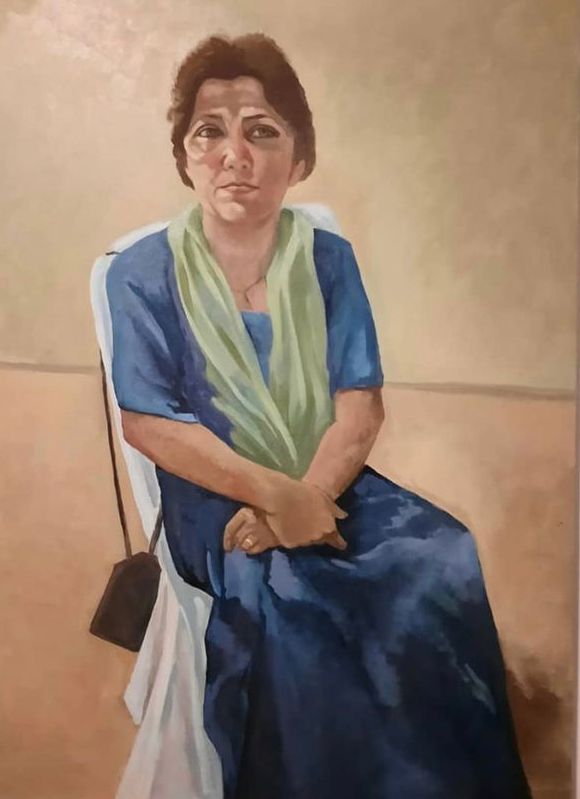
Pictured: Abdul Azim Noori, Aisa Noori, 2008. Oil on canvas.
Abdul Azim Noori opens the door to his Medebach apartment before we have the chance to knock. The solemn German apartment, constructed post-war, made him look taller than he actually is. But the practical, minimally decorated entrance belies his larger-than-life smile and warm embrace. He greets me with khush amadi, clasps my hand, and pulls me into his home.
It is not the same place I remember visiting years earlier as a teenager, at that time accompanied by family, yet his home remained familiar. I step into the hallway and find my hand drifting towards his wife. She greeted me with the same grin and Afghan hospitality as her husband. As I lean in to greet her, my eyes quickly land on a portrait hanging behind her. Looking back at me, it offers an austere expression.
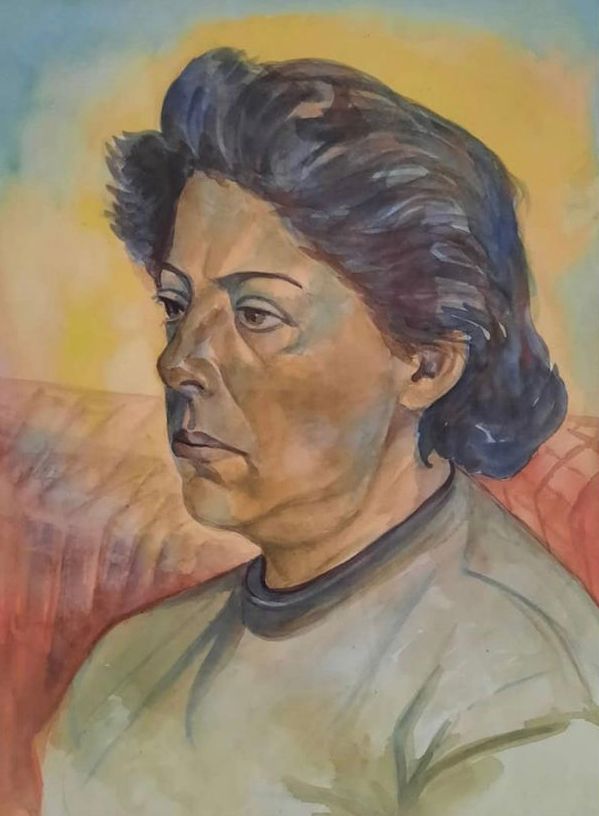
Pictured: Abdul Azim Noori, Portrait of Aisa Noori, 2007. Oil on canvas
Fast forward to four years later, Noori is one of many who find themselves filling their life in isolation with a new, if not revived, pastime. With the support of his tech-savvy daughter, artworks produced in the second half of his lifetime are recaptured and archived via Instagram. As the most widely used digital platform of our time, it was almost inevitable that the dots would eventually connect even in a highly dispersed diaspora. Seeing the portrait again on my phone screen led me to artist and curator Muheb Esmat. In conversation, we put together different pieces of a puzzle we did not know we were solving. Published in 2013, Enayatullah Shahrani had cataloged Noori’s portrait of his wife in Contemporary Painters of Afghanistan. Despite being printed in black-and-white, it managed to carry the vividness of the scene and certainly enough for Esmat to recognize it among his vast library of Afghan audio-visual material.
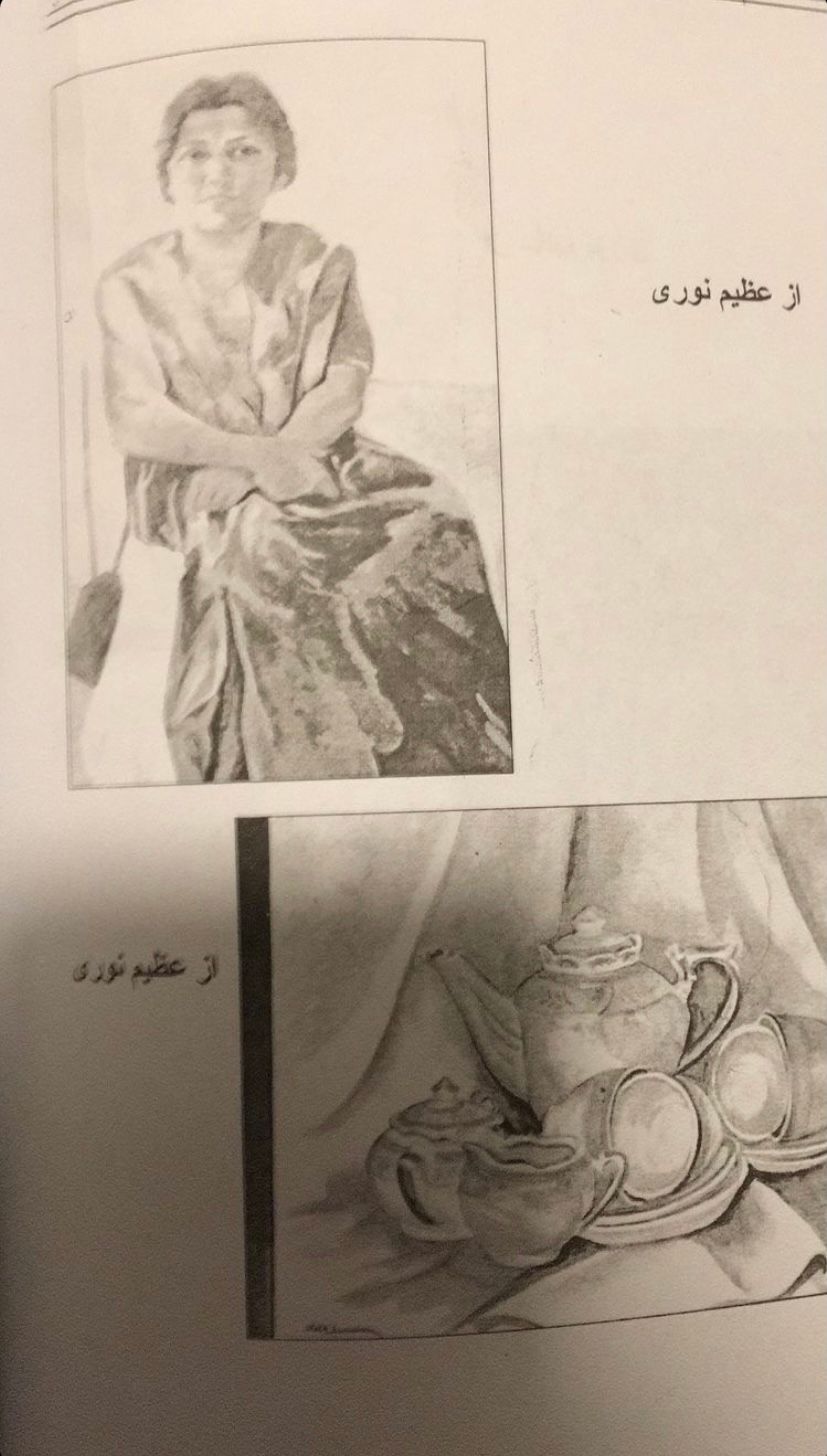
Photo of Abdul Azim Noori, Aisa Noori, 2008 in Enayatullah Shahrani, Contemporary Painters of Afghanistan, 2013 (Publisher: Azadi). pg.300.
Born 1956 in Panjshir, Noori was the product of a growing working class migrating to the capital city to access the increasingly standardized education institutions under Zahir Shah. The artist’s predecessors lived off agriculture and taught at the local level. The monarchy enabled financial aid from initially Germany, Italy, and in competing fashion, the US and Soviet Union. This took the form of scholarship opportunities, inviting young Afghans to programs abroad. Among them was Noori, who received an award to pursue a Master’s degree at the Surikov Art Institute in Moscow. The road to this milestone was, however, not only less traveled but equally, if not more, enduring.
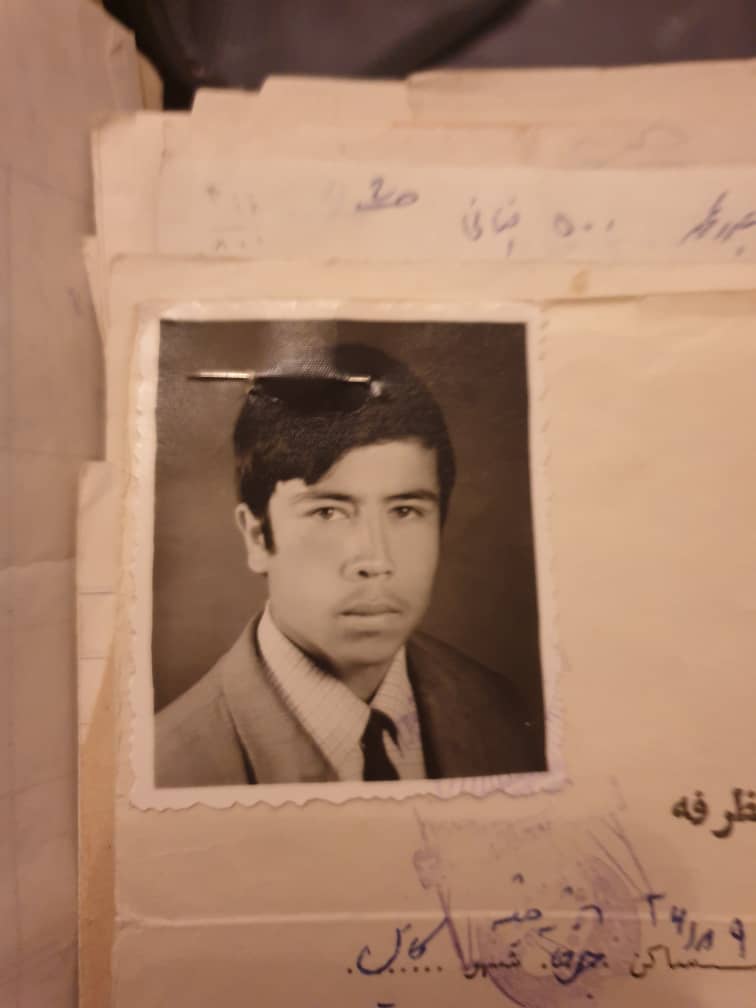
Photo of Abdul Azim Noori’s student ID at Kabul University, 1972. From the artist’s personal archives.
“When I look back at where this idea of painting took root, I remember a very particular teacher early on in my childhood at the art academy in Kabul,” he tells me on the phone. “It was in year 9, when Miralam Honaryar reviewed my work for the first time, and quite humbly remarked that with practice, I would become a good artist. At that time, he had just returned to Kabul from studying in Germany. So this exchange triggered that very first idea, that first confidence to pursue something greater that this practice contained, and his feedback always stayed with me.”
Thus, it only made sense to take the kankor exam in 1975 and pursue a Bachelor’s degree at the newly established Faculty of Arts at Kabul University. This initiative was led by sculptor Amanullah Haiderzad who studied in Italy. Over the course of his undergraduate time, Noori studied under Enayatullah Shahrani, a University of Arizona alumni, as well as Khawani Khan, who trained in Germany. It was here that Noori’s life-long friendship began with both professors and later peers.
“We strictly followed realism and classicism under Khan’s mentorship, which made sense, considering his education in mid-century Europe.”
Soon after graduating from Kabul University, Noori won a teaching position. This, however, was a short-lived dream of a young artist and academic. With growing political unrest in the state, Afghanistan deposed its last monarch in 1973 and went through an era of a republic under Daoud Khan, before the coup of 1978, which plunged the nation into the ongoing conflict and occupation today. Like many, Noori was conscripted to serve under a highly factionisalist communist party in 1983.
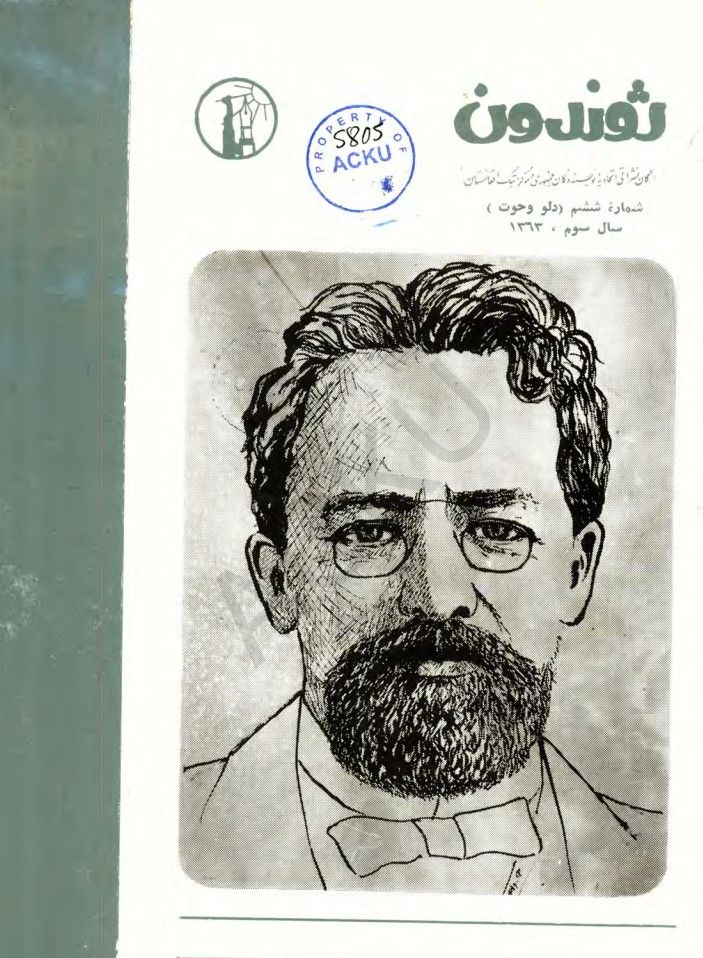
Zhvandūn (ژوندون), vol. 3, no. 6, 1984. pg. 1. Source: Afghanistan Centre at Kabul University (ACKU) Digital Archive. Accessed: http://www.afghandata.org:8080/xmlui/handle/azu/18031
Having completed his military assignment, Noori once again returned to the city to teach first-year students at Maktab-i Sana I-yi Nafisah (Kabul School of Fine Arts) founded by Ghulam Mohammad Maimanagi, then under the Education Ministry. It was here that the Soviet Union’s interventionism rewarded its serving comrades with eligibility to apply for fully-funded higher education courses in the Soviet state’s capital. Noori accepted and soon found himself in the halls of the Surikov Art Institute, leaving his home behind without realizing it would be the last time. Prior to his departure, he would capture a memory of Kabul, as it was in 1987.
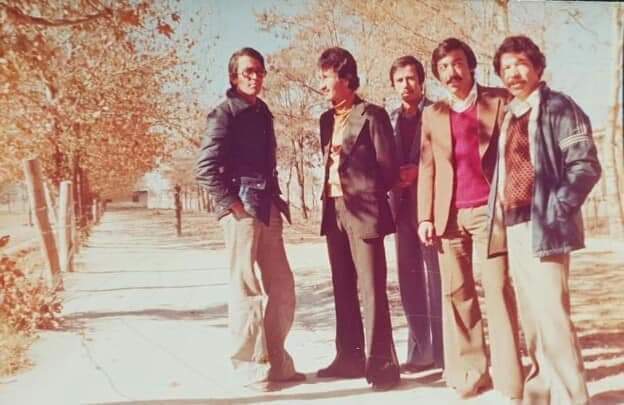
Photo of Abdul Azim Noori (centre) and classmates at Kabul University, 1977. From the artist’s personal archives.
Founded by post-impressionist painter Igor Grabar in 1939, the Moscow art school, commonly referred to as Surikovka, was famed for reinforcing realism across its faculties of painting, sculpture, graphic art, and history of art.
“Though early on, Khan instilled realism and classicism in my foundational practice, I continued this style of painting in Moscow. This was entirely my choice and certainly aided my work as I took up courses in composition, figure, and movement. To this day, it remains my style of choice and I greatly prefer it over anything else.”
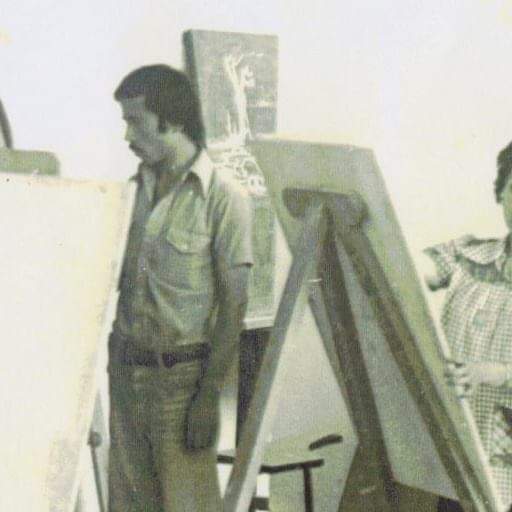
Photo of Abdul Azim Noori at the Institute of Marxism–Leninism in Moscow, 1980. From the artist’s personal archives
When asked about what happened next, Noori’s impelling enthusiasm quickly withdrew for this chapter.
“Untimely, as I graduated in 1991 and started my PhD program, the Soviet Union dissolved. All the while, the prospect of long-term, severe instability in Afghanistan grew significantly larger than at any other point before. Naturally, I had to abandon my studies and decided to stay in Moscow until the unrest settled down.” However, this moment never came. What followed in subsequent years was the fate of millions of Afghans — displaced, dispossessed, deported — an ongoing occurrence to this very day. Re-entering the Russian labor market, Noori took up work in retail wholesale until ultimately migrating to Germany in 1999 with his wife and now four children. “It took me years to build from ground zero again. On top of that, the wait for a residence permit was incredibly dreadful in the background of our efforts. There was no opportunity, no time, let alone headspace for a creative practice to take up room. As a father, my role and focus entirely shifted to securing safety and stability for my family.”
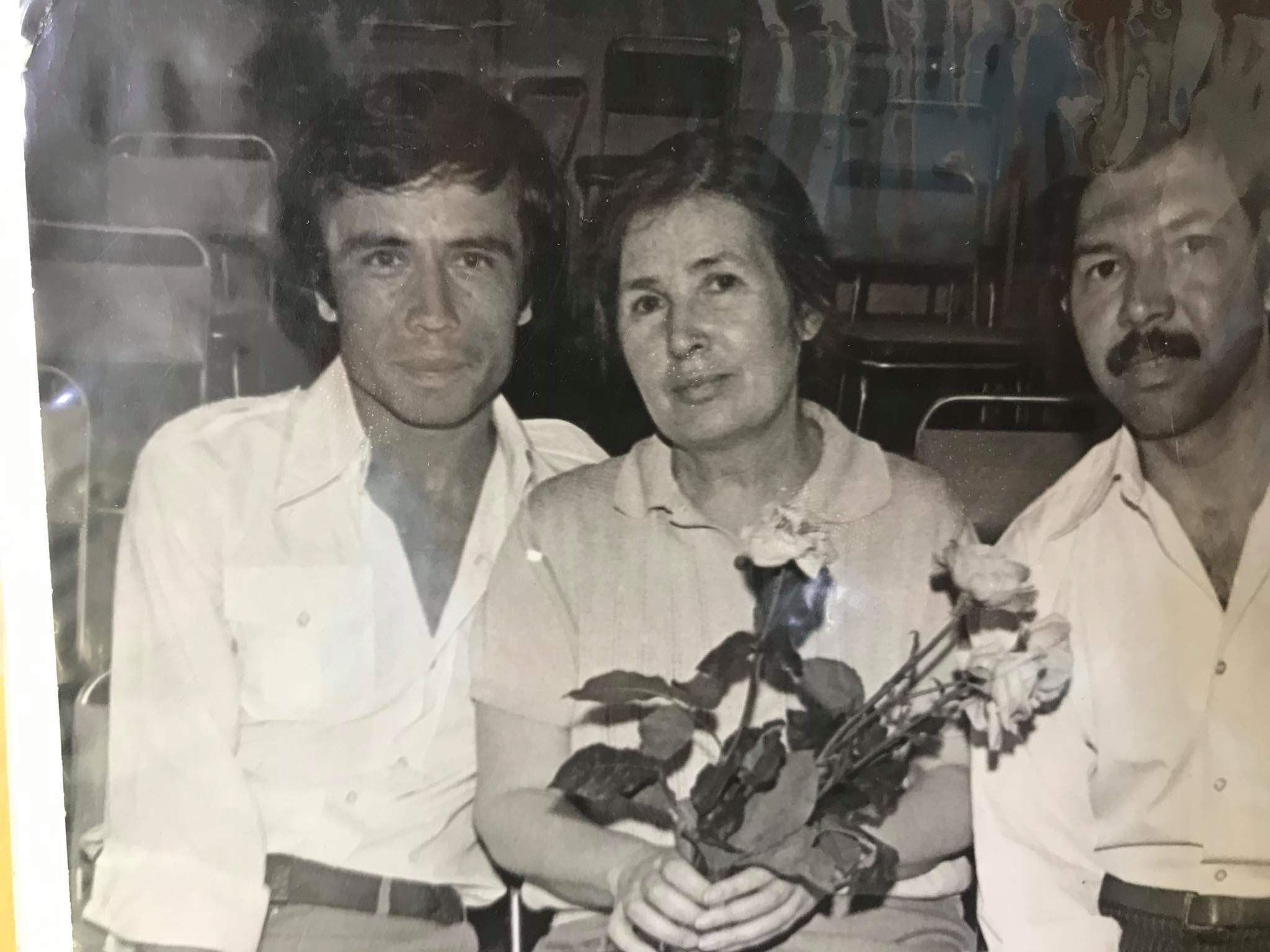
Photo of Abdul Azim Noori (left) with the dean of Kabul University’s Fine Arts Faculty (centre), 1978. From the artist’s personal archives.
On intermittent occasions, Noori re-established contact with Shahrani, Honaryar, Khan, and even art historian Hamid Naweed who made use of the other side of the coin and studied in Virginia via the American Fulbright program.
“It is because of our digital age that I located my professors, and you have been able to come across my paintings in Shahrani’s book. I also started to find more spare time, in almost equal correlation to peace of mind, now that I have secured residency and a steady job. And so, I began to paint again. At first, my inspiration came from still life, then my wife and children. I have come to paint from imagination now also, drawing from folkloric scenes and people I can remember.”
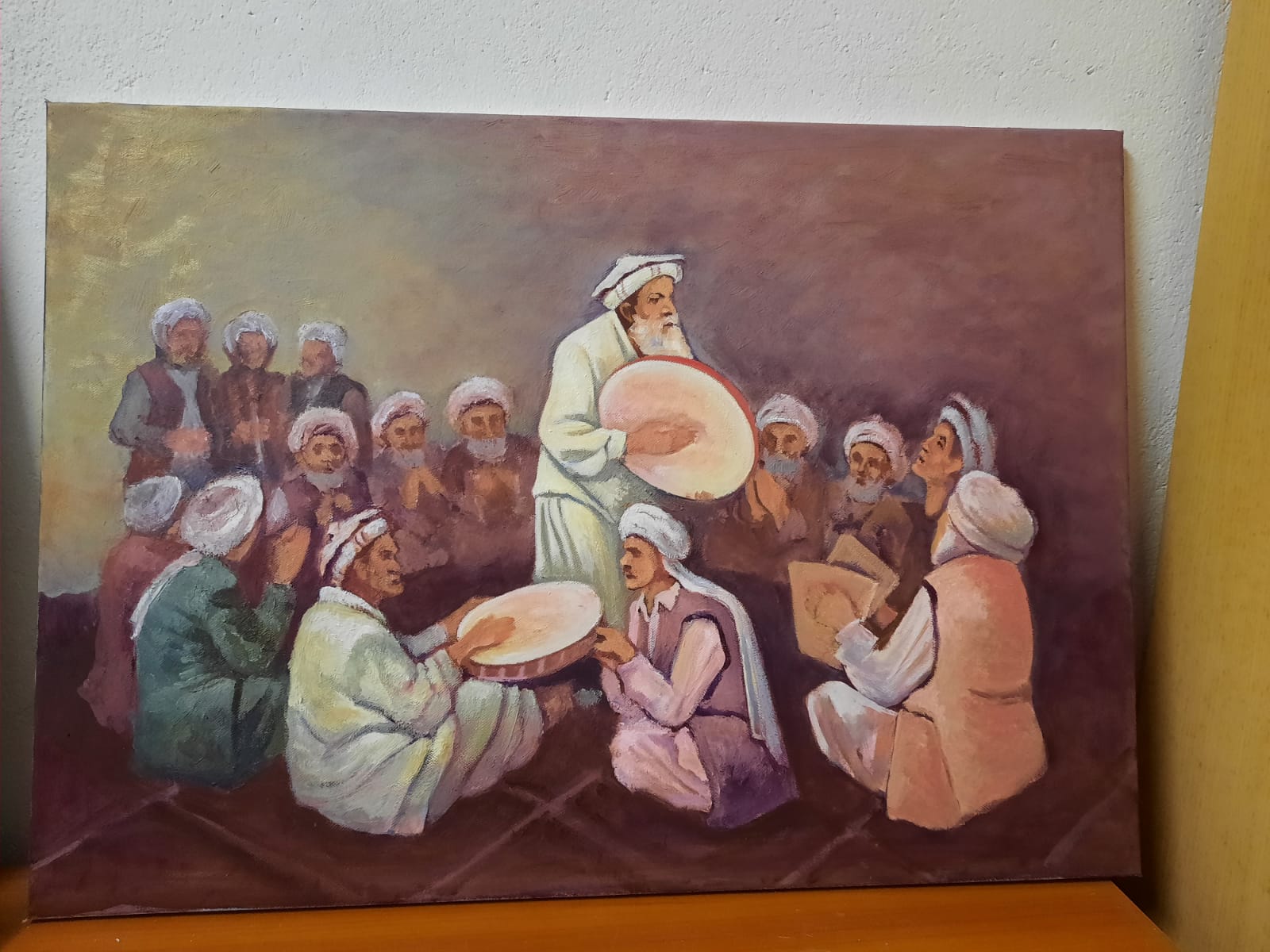
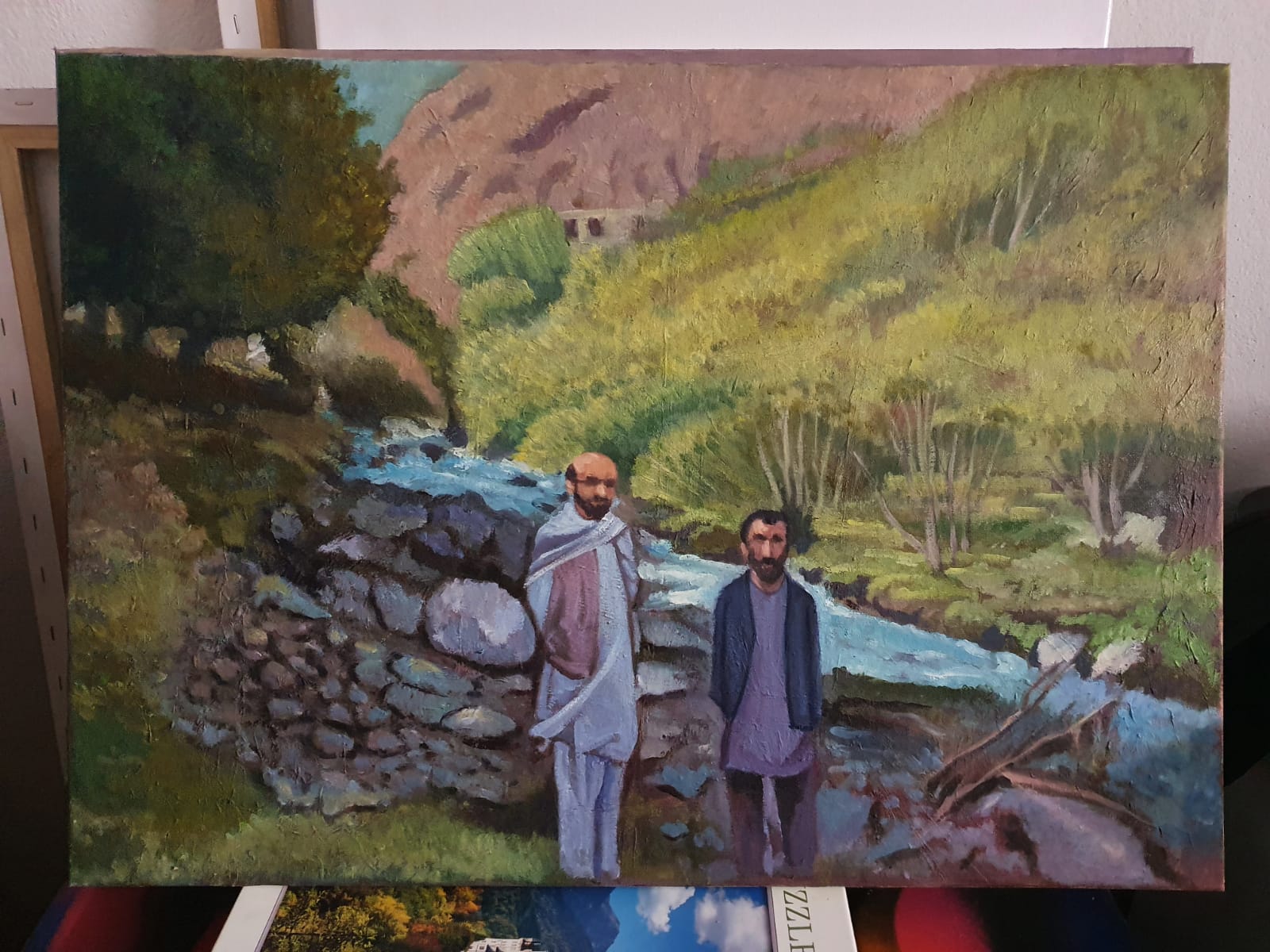
Pictured: Abdul Azim Noori, Qarsak Panjshir, 2016. Oil on canvas.
When asked how Noori perceives the landscape now, a sobering expression appears for the first time.
“Despite more than two decades of foreign aid, the Faculty of Arts is greatly under-resourced and underfunded. It was an understandable state in my time, but really, with both governmental and NGO aid coming in, students should have wider access to higher education. If I had the chance, I would not hesitate twice to return and teach again.”